
Autumn Olive Jelly
Not fermentation, but still preservation
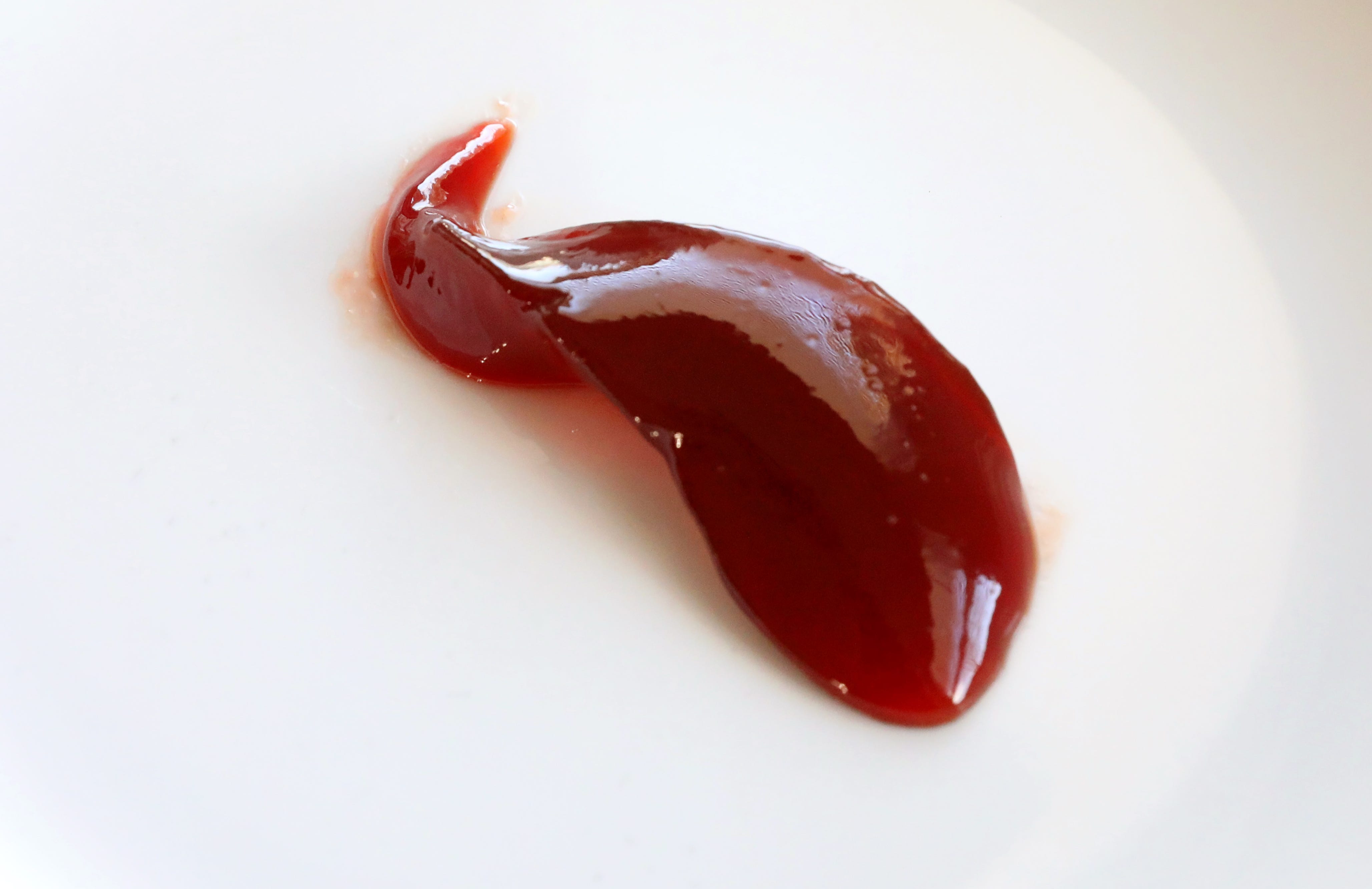
Rich was here recently (cool projects afoot) and he brought a pile of stuff from his freezer that I’ve been playing with. I’m very excited to write about one such experiment, but it’s not ready yet so in the meantime I want to focus on this delightful jelly I made from the big bag of autumn olives he brought, which he foraged back in the fall. Autumn olive (Elaeagnus umbellata) is an invasive Asian shrub that was brought to the U.S. in the 19th century for landscaping and soil retention. It’s not as aggressive as knotweed, but it does out-compete native species that provide more nutritious food sources for wildlife.
Each fruit has a good-sized seed in it, so jelly was definitely the right choice. I like to make most of my fruit preserves using honey, because it’s the local sugar (maple has a much more assertive flavor). So I cooked the fruit with some honey and worked on the pot with my trusty potato masher after everything got soft, breaking up the fruit to release juice and get lots of pigment into it.
Once it was more of a slurry, I hung it in a jelly bag over a big bowl and let it drip. The solids are fermenting into a tepache right now, which should be ready soon, and I put the liquid back on the stove to reduce some and I hoped, gel. Pectin is the protein responsible for most jams and jellies. Many fruits have plenty, some have none. I had no idea how much pectin these fruits contain, but I figured worst case I’d end up with a tasty red syrup that I could use like pomegranate molasses or grenadine.
Pectin needs both sugar and acid to gel properly—that’s one of the reasons some types of jam use an ungodly amount of sugar. I like my preserves on the tangier side, so I’m always trying to get away with as little sweetener as possible. Pectin also needs acidity, and while these fruit have a nice tartness they’re not super sour. As the liquid reduced, I did the trick of putting a little spoonful on a plate that I’d chilled in the freezer—if the drop holds together and doesn’t run down the tilted plate then you can see that it has gelled.
This wasn’t cooperating, so I added some more honey and a tablespoon or so of the Meyer lemon juice that I froze after I brought a bunch of them back from California in the spring. Those two amendments, combined with the additional reduction time, did the trick—it gelled perfectly. I got just shy of a quart of jelly total and canned all but a half pint, which is in the fridge.
This isn’t much of a recipe, obviously, but it is an instance of using experience and intuition to achieve the desired result with a minimum of compromise. It’s not too sweet, and the lemon really doesn’t register as a flavor since it’s such a tiny percentage of the total. The result captures pretty vividly the sweet, slightly earthy, gently tannic nature of this fruit. It’s going to be as good in my breakfast oatmeal as it will be on duck: i.e., exactly what I wanted.
Understanding a little bit of what makes preservation happen and how the underlying processes work allows for less measuring and more improvising, winging it in the moment—which may not be your style, granted, but it’s definitely ours.


I've wanted to make autumn olive jelly from the ample supply on my property, but they are so astringent I've not picked them in quantity. I once made jam with some terribly astringent (though perfectly ripe) wild plums which taught me that astringency isn't mitigated by sugar. Some autumn olives are perfectly sweet, but the ones along my driveway simply are not. Wondering if you have found similar variability in Elaeagnus umbellata?