
Europe's Largest Garum Factory
A visit to Plomarc'h Pella
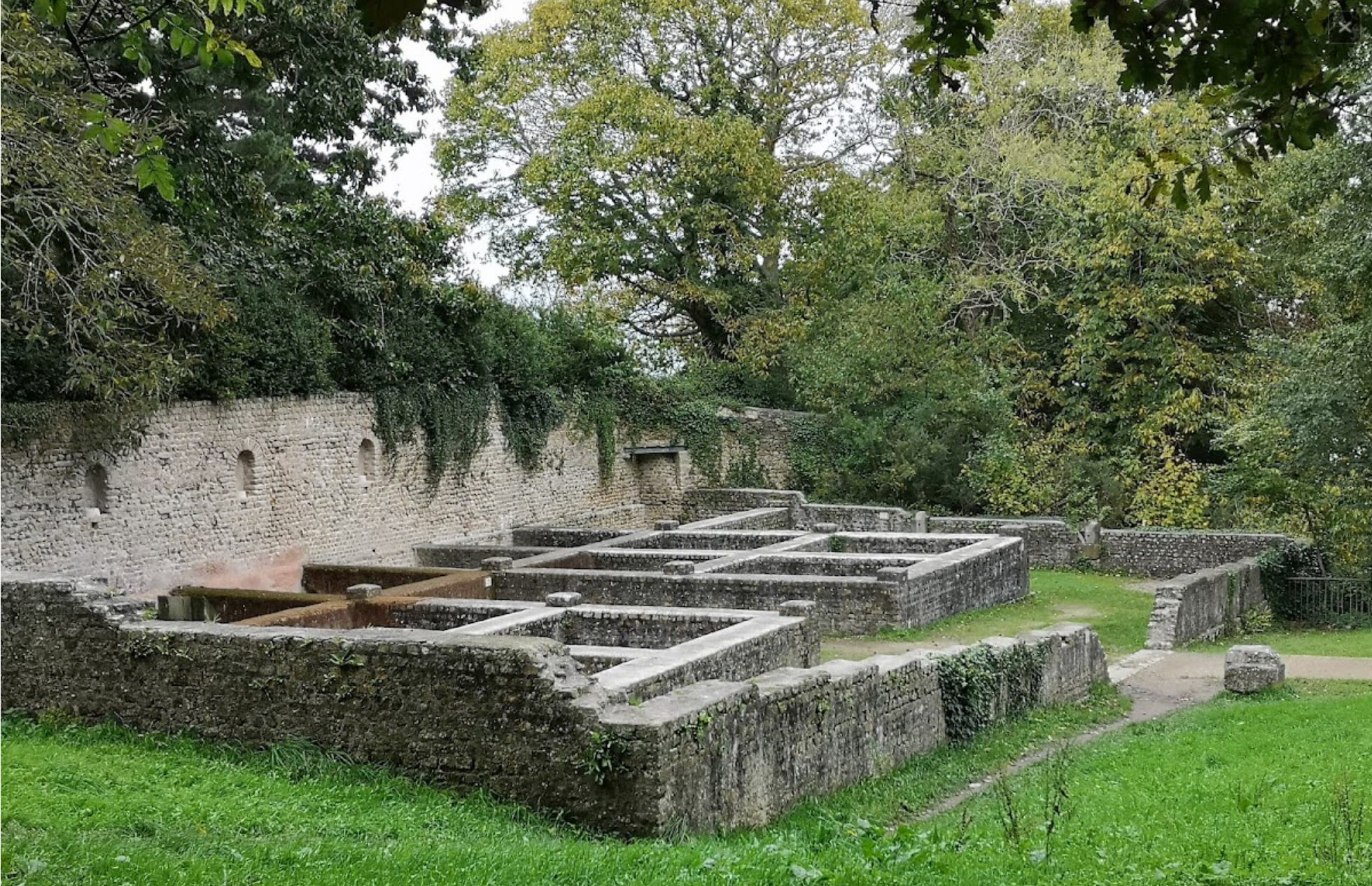
A short walk outside the coastal Breton town of Douarnenez one comes upon a large ruin, the interior of which contains 15 square masonry basins. This site constitutes the remains of Plomarc’h Pella, originally a complex of at least four buildings dedicated to the processing, salting, and fermenting of sardines to make garum. The factory was built around the turn of the 2nd century CE, and stayed in use for a couple hundred years. It was restored in the 1990s.
Those basins lined with waterproof mortar (the reddish color) were used for fermenting the salted fish; the remaining unlined basins held raw materials (salt and spices) and amphorae of the finished product ready for transport. This is the largest known garum-making facility in all of Europe. Much larger factories existed in North Africa, which were responsible for the bulk of fish sauce production at the height of the Roman Empire.
I’ve said this during my classes—it’s helpful to remember that just about all of the fermentation processes that we engage in have their origins in ancient traditions. While today we have a much more detailed understanding of the microbial and enzymatic activities that make these products, they were all identified and refined by (often illiterate) people millennia ago. There’s nothing complicated about any of this. We know today that the enzymes koji produces to digest the grain or legumes that it grows on are functionally identical to the enzymes inside the digestive tracts of sardines and anchovies. So we can make fish sauce analogs using just about any protein source and koji instead of limiting ourselves only to fish.
There was some discussion on the Kojicon Discord about nomenclature, specifically about using the words “miso” and “shoyu” to designate products not made using soy and/or rice. One could similarly say that garum isn’t an apt descriptor for something made with aquafaba (one of my recent discoveries), though given that Latin is a dead language maybe we have more license to use it creatively. It’s worth noting that Romans had several words for fish sauce liquids and the strained solids, including garum, liquamen, allec, muria, and haimation. Some were made with salted whole fish, others with just blood and viscera, some a mix of the two—and large fish like tuna were popular for their copious blood and guts.
These terms lack clear definition for three main reasons: first, the roughly 2,000 years that have elapsed since much of the surviving documentation was written, and there’s not much definitive documentation—mostly references without explanations. Second, even if we limit ourselves to the the period between the founding of the Republic and the collapse of the Western Empire we’re talking about just shy of a thousand years. Culture and language can change an enormous amount in that much time, so it’s highly likely that methods and definitions evolved. Finally, it seems clear that many Romans didn’t really understand the differences themselves, and that the class hierarchy meant that elites (who could write) may never even have set foot in a kitchen.
What do you think we should call non-fish enzyme ferments? I’m in Brittany this week, working on the book, and have some cool ideas to implement when I get home. In the meantime, here’s a short and informative video about it (in French, so turn on subtitles if you need to) that does a decent job of showing the site and its history and use.


