
Oatmeal-Raisin Miso
Flavored ferments offer infinite possibilities
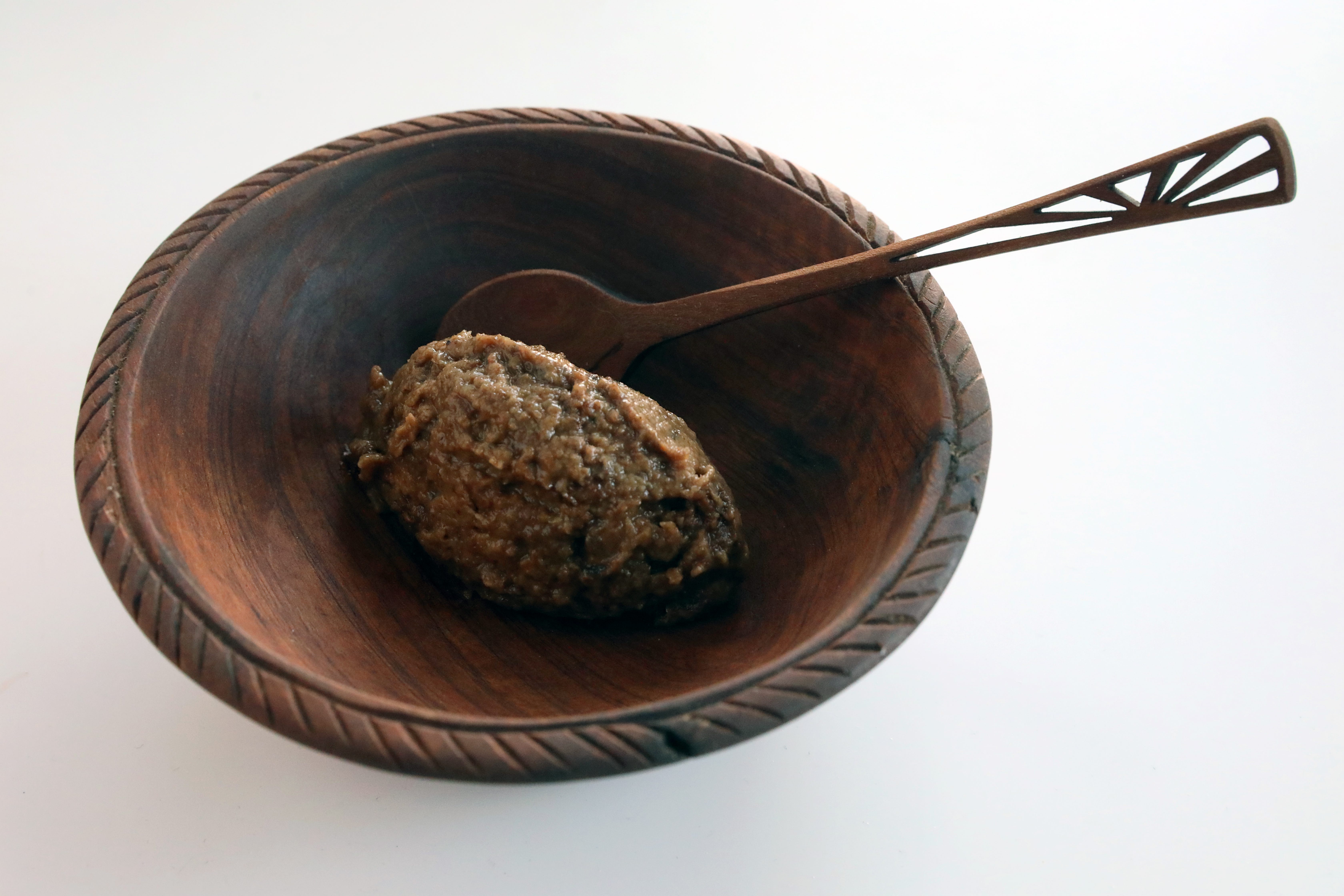
On Kojicon’s last day I joined chefs Jeremy Umanski and Ernest Foundas for some practical applications of koji in cooking. My portion focused on oatmeal, because I’ve spent some time digging into its potential on both the sweet and savory ends of the spectrum. One of the things I talked about is this delectable concoction, which works equally well in sweet and savory applications.
Because it’s relatively low salt at 6% (you can make it at 4%, especially if you’re going to use heat to accelerate the enzymes—see below) it’s amazing in cookies, brownies, and sweet oatmeal applications. It also works wonderfully in any savory situation where those pie spices fit in, particularly Moroccan, Scandinavian, and Vietnamese dishes.
Maybe the first way you should try it is adding a spoonful to a jar of overnight oats, using your regular recipe except with no added sweetener, and letting the enzymes break some starch into sugar while you sleep. The result will have a natural sweetness that you can enhance afterward if you like, but it will also be a little salty (in a good way) and have a wonderful added depth from the umami.
Makes about 1/2 gallon (2 liters)
940g cooked rolled oats
515g koji (I used rye bread, but barley or rice would be fine)
500g apple purée
75 g raisins, chopped
122g salt (6%)
Spices, all toasted and finely ground:
1 cinnamon stick
1 star anise
1 allspice berry
6 cardamom grains
Combine everything in a large bowl and mix thoroughly until homogenous. Form the mixture into balls and pack them into a glass jar or ceramic crock, being careful not to leave any air pockets. Sprinkle some salt over the top, cover it with parchment or plastic if you want, and add a weight. Age it at basement temp for at least a month, checking periodically for mold around the weight. It can age for much longer if you want, especially if you increase the percentage of salt. Alternatively, you can accelerate the enzymatic activity and prevent any bacterial fermentation by heating your jar in a water bath at 140˚F/60˚C for a week or so, or up to a month.


