Preserving Rhubarb
Part 2: with salt
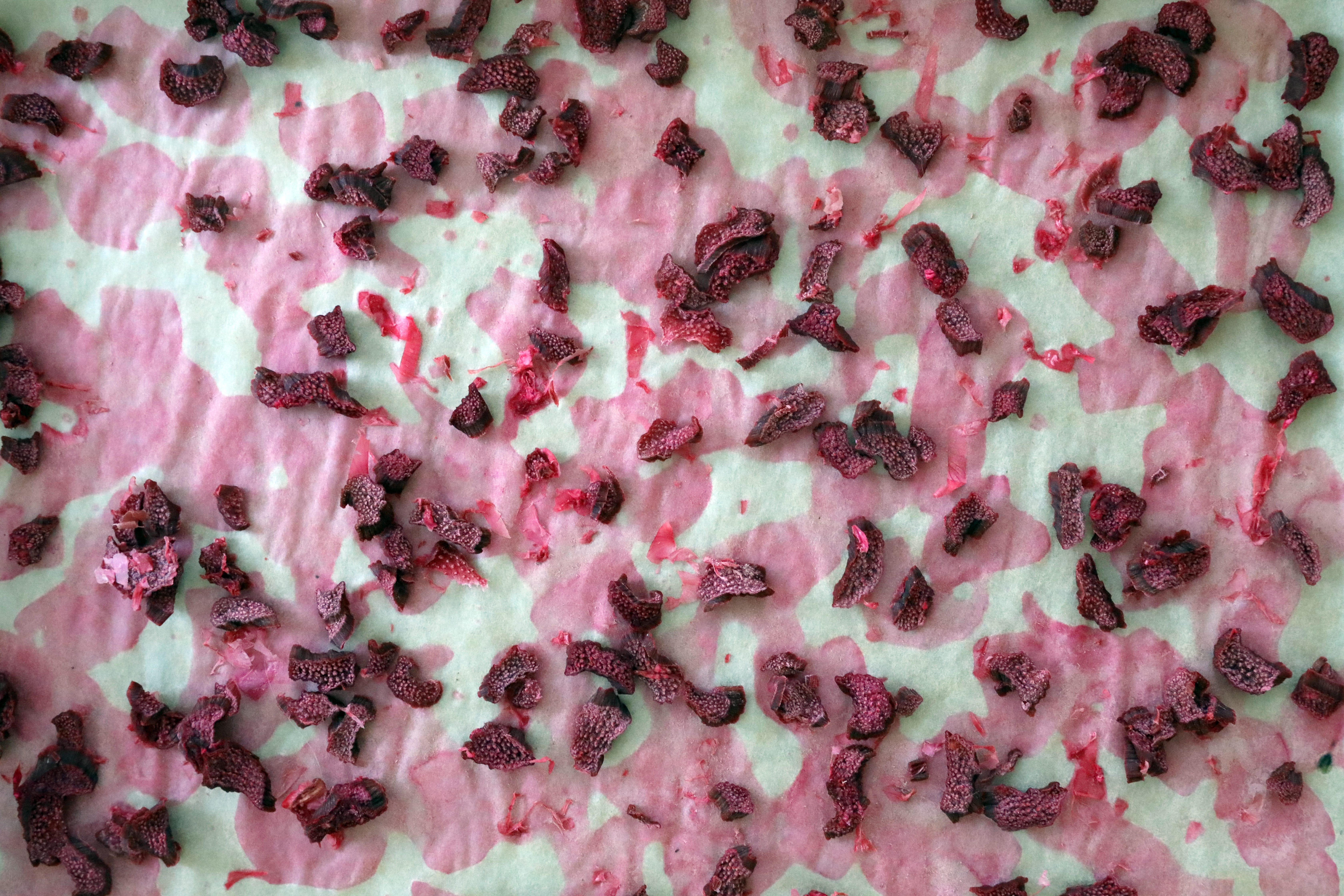
Rhubarb’s strong acidity makes it a wonderful local (for me) substitute for citrus, especially when juiced. Fermenting it in any form adds more depth to this sourness, and the salt used in lacto-fermentation helps to bring out a savory umami edge that’s quite irresistible. I had an idea to use rhubarb to make a sort of umeboshi analog using stalks cut into small segments, so after chopping I added 2% salt and packed it all into a jar after tossing it thoroughly to disperse the salt.
Overnight, under the pressure of a stainless steel spring (see the photo in the last post) the rhubarb released enough water to cover all the solids. I let the jar ferment on my counter for about a week, at which point I tasted it. It was good, but not stellar—a bit one-dimensional. Texturally, the rhubarb pieces were a world away from umeboshi: crunchy and fibrous even though I crosscut the stalks into thin slices.
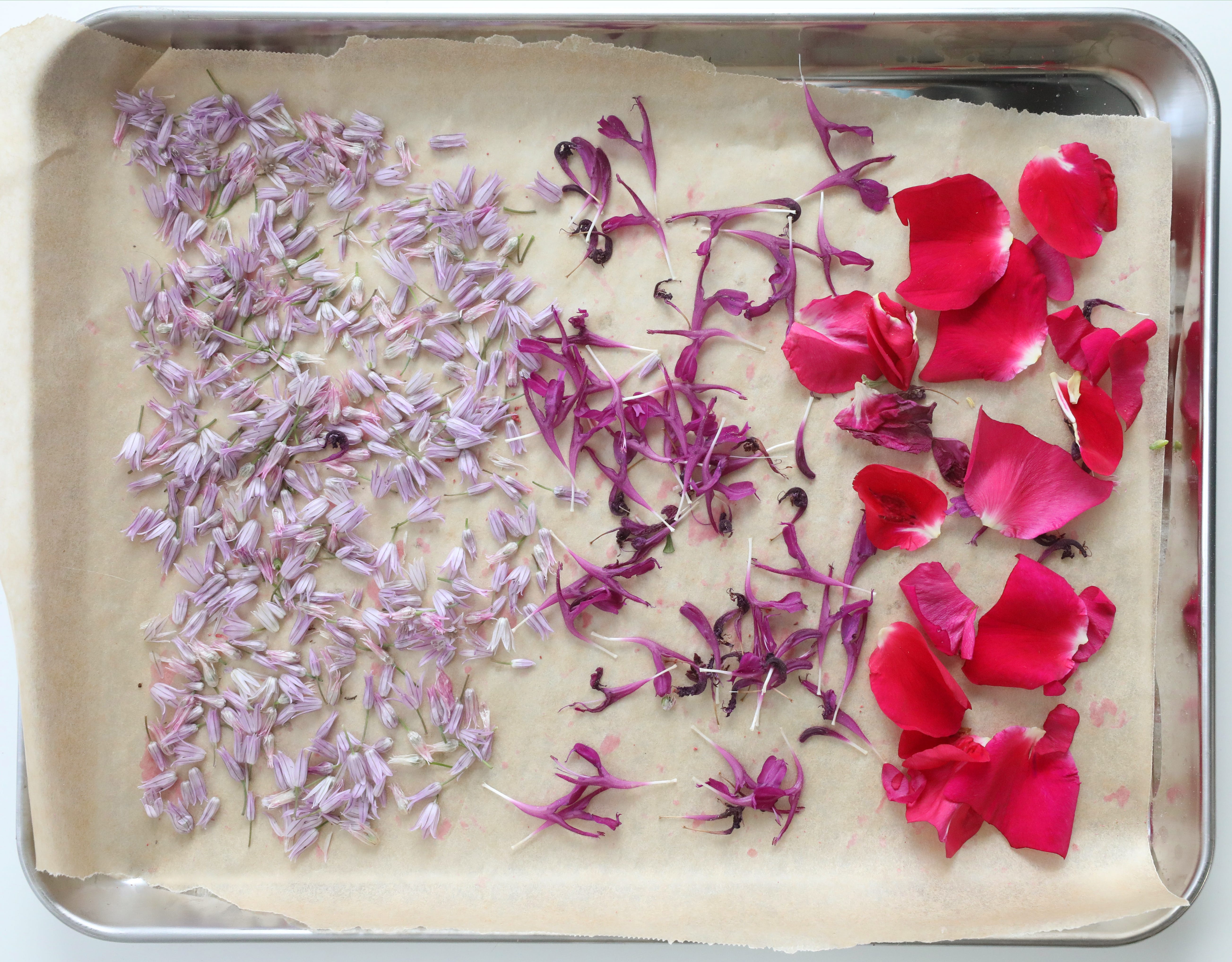
Happily, spring is in full effect so the rhubarb is not alone in my garden. A quick perambulation yielded three more ingredients that were exactly what I needed to turn this ok pickle into something stellar. You’ll notice that they all sit within a fairly narrow range of the color spectrum, and that’s not a coincidence—a lot of the choices I make when it comes to combinations derive directly from colors that will harmonize well together. These pinks and purples positively called out to be blended, so that’s what I did. And the result is as delicious as it is beautiful.