
Size Matters
Small decisions make big differences
Most fermentation methods are defined by a highly favorable ratio of rules to possible permutations. This makes them wonderful sources for inspiration, with a low bar for entry and great flexibility depending on what ingredients we have in front of us. The same ingredient and method can easily be steered in lots of directions based on supporting flavors (like, say using a South Asian spice blend as opposed to a Mexican one). So a pile of produce can yield a variety of products with different personalities and uses, rather than one huge crock of pickles. But today I want to explore an even more prosaic variable: knife work.
To illustrate this, let’s look at a handful of lacto-fermented Hakurei turnip products I made recently after I brought in the harvest ahead of the first snow. I did play with some additional flavors, sure, and I’ll lay those out for you. But the factor most responsible for each pickle’s widely diverging character was the way I cut the turnips.
To start, I like to think of a vegetable the way I would a whole animal and butcher it accordingly. In the case of these turnips, they divide pretty neatly into three different parts, each of which can and should be treated differently. The roots, trimmed of their wispy taproots (which go in the stock pot), are great for many applications: the stars of the show for sure. The leaves come in second, and can work anywhere you’d reach for spinach, collards, or another cooking green (they’re also lovely in salads when they’re small). Coming in third, the stalks are crunchy and juicy, but also fibrous—so you need to take that into account when prepping them.
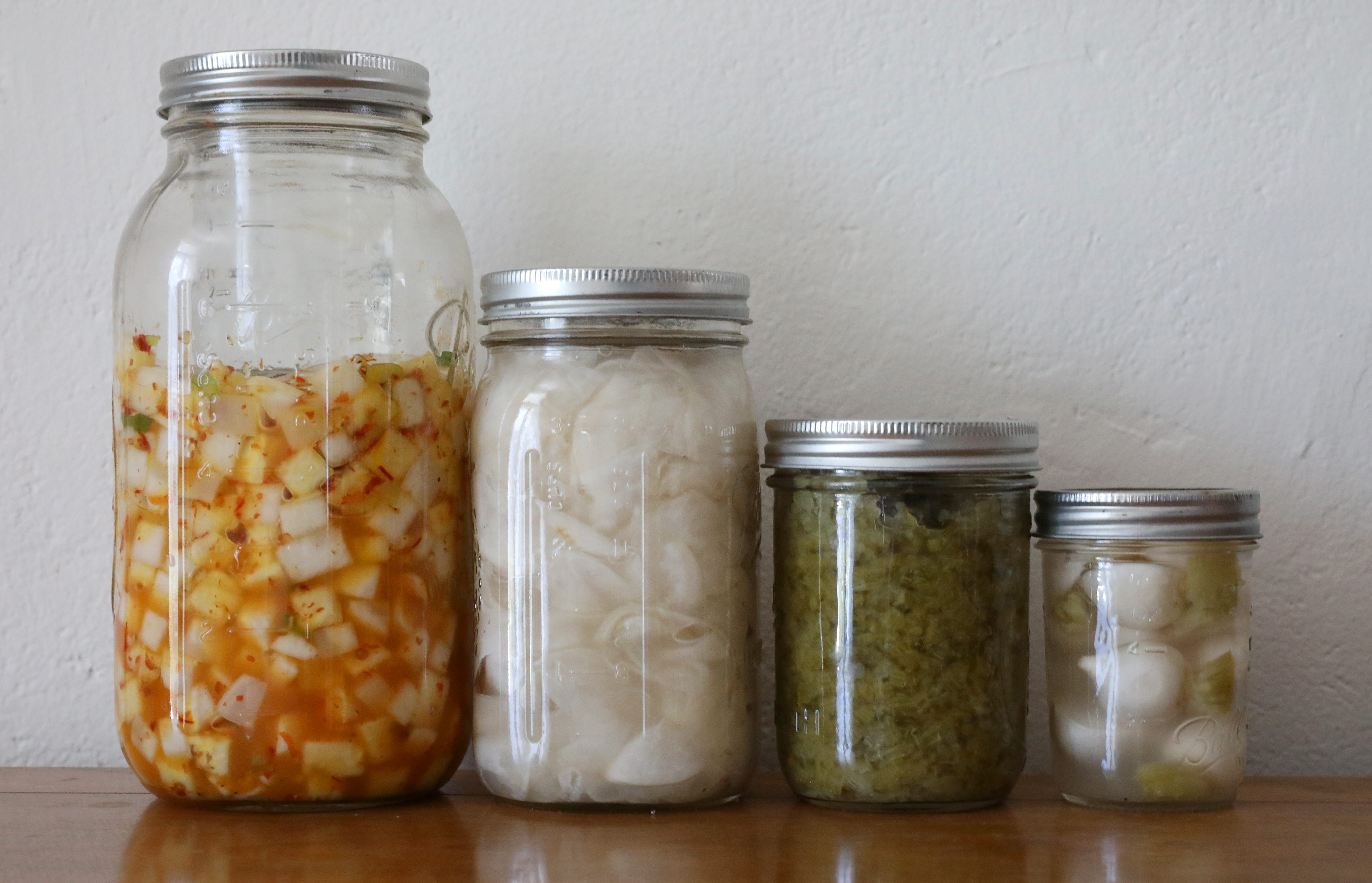
Let’s skip the leaves, because I didn’t ferment them. I did cook them, and I’ll be posting about them soon on my other newsletter. The jars in the photo up top all came from the same batch of turnips, and they’re all lacto-fermented. The green pint jar is full of finely chopped stalks, cut crosswise against the grain to eliminate that fibrous quality. There’s no seasoning besides 2% salt by weight, the minimum for safe fermentation. I’ve already used them in dandan noodles, subbing them in for ya cai (fermented mustard green stalks), since turnips and mustard are related, and they were wicked. Waste not, want not.
The smallest jar contains the smallest turnips from the harvest, halved longitudinally and pickled in a 3% brine. The higher percentage of salt in the brine reflects the fact that salt pulls water out of the turnips, diluting the brine, so it’s important to account for that. I added a few dried spicebush berries to this, and since they taste quite a bit like allspice they add a nice little pickling spice note. These are great for snacking, finely dicing for a tuna salad, or adding to a charcuterie plate or ploughman’s lunch. They function like cornichons so deploy them accordingly.
The quart jar contains nothing but mandolined slices of turnip and 2% salt. They’re thin and silky and elegant. I like to squeeze a small handful dry and then put them in sandwiches for a crunchy pickled bite that doesn’t interfere with the neat stratigraphy of cold cuts or similar. The half-gallon jar has a version of my world-famous turnip and pineapple kimchi, my favorite use for unripe or lackluster pineapples. Dice both things into equal-sized cubes, then add some scallion, ginger, hot pepper, and 2% salt. In this case I also added some grated fresh turmeric and a pinch of saffron, because I wanted to turn the white turnips yellow to match the pineapple. You can see that it’s already starting to happen. I wanted the sunniest and most cheerful kimchi I could muster.
If you have the time, and especially if you have a glut of one ingredient, it’s well worth the extra effort to transform it into several fermented treats. Their presence in your fridge will suggest more meal possibilities (like dandan noodles) and replace more store-bought standards (like cornichons, or bread & butter pickles, or a thousand other products). As a result, you’ll eat better, cheaper, and healthier than you otherwise would have. That’s a win/win/win right there. You’ll also have fun, and use your imaginations, which are both becoming more important by the day.
Which brings me back to the aphorism at the top of this post. Simply put, the great genius of fermentation boils down to one concept: learn a little, do a lot.


