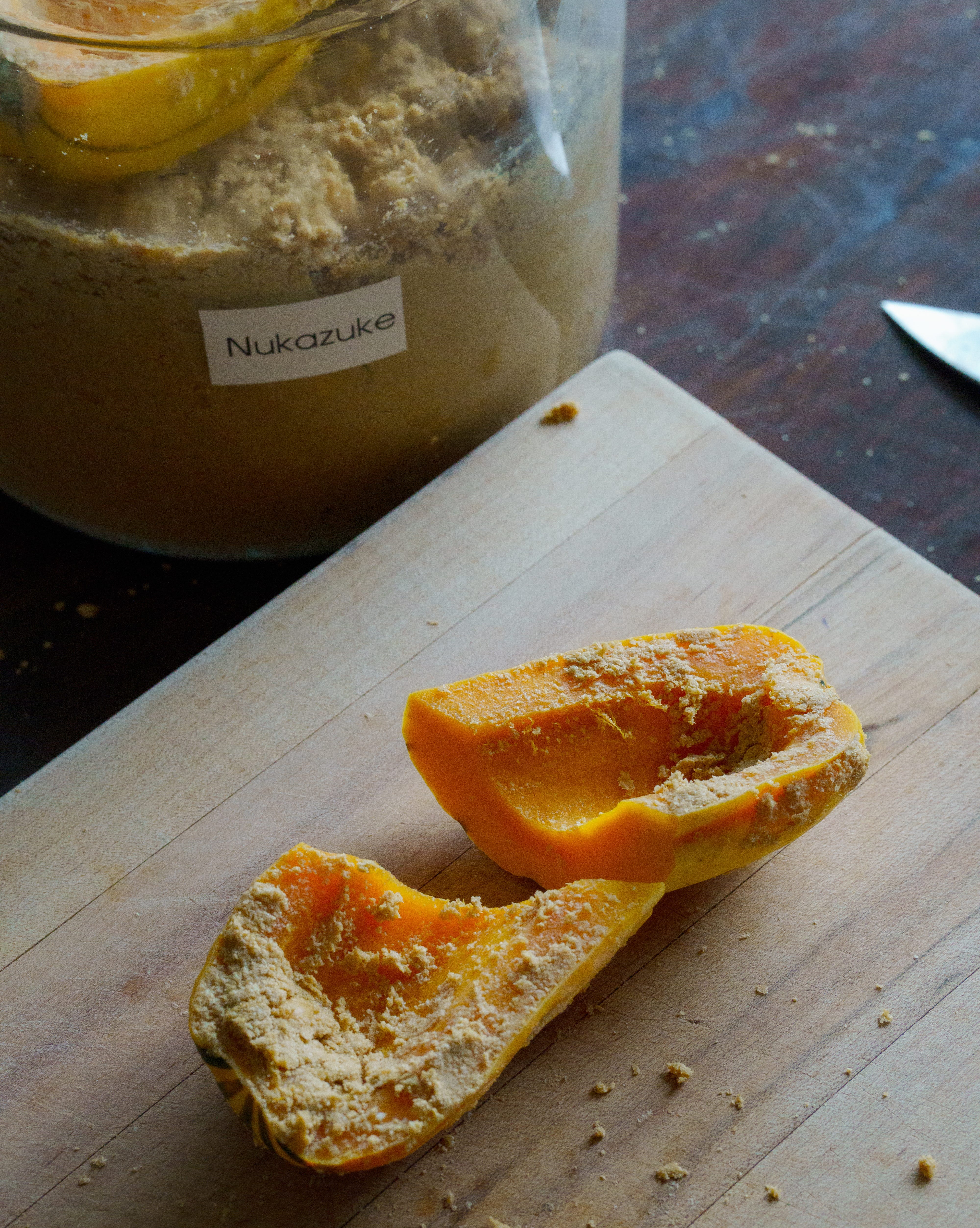
Nukazuke
An everyday pickling method that evolves over time
Hi all,
Today’s guest post is by Jaimon Westing, a Seattle-based chef with a long list of accolades and accomplishments. Most recently, he launched Amino, an experimental pop up centered on modern fermentation techniques, and co-founded Symbiotic Cultures, a koji-based fermentation shop with his wife, Michelle Westing.
You can find all three on IG: @jaimonwesting @symbiotic_cultures @amino_seattle
Nukazuke occupies a special place in the world of Japanese pickling because it represents a harmony between technique, habit, and everyday nourishment. At its core, nukazuke is simply vegetables fermented in a bed of seasoned rice bran called nukadoko, but the real story lies in how that bed lives, how it is cared for, and how effortlessly it can become part of daily life.
The foundation of nukazuke begins with nuka, or rice bran. This finely milled byproduct of polishing rice is mixed with salt, water, and aromatics such as dried kombu, chili, ginger peels, and garlic. When combined, they form a soft, sandy mixture with a moisture level similar to damp soil. Left alone, this mixture does not do much. But when stirred daily, fed with starter vegetables, and given time, it wakes up. Wild lactobacilli that are naturally present on vegetables and in the bran begin to take root. Over days and weeks, the bed develops a mild acidity, a nutty aroma, and a gentle warmth that signals healthy fermentation.
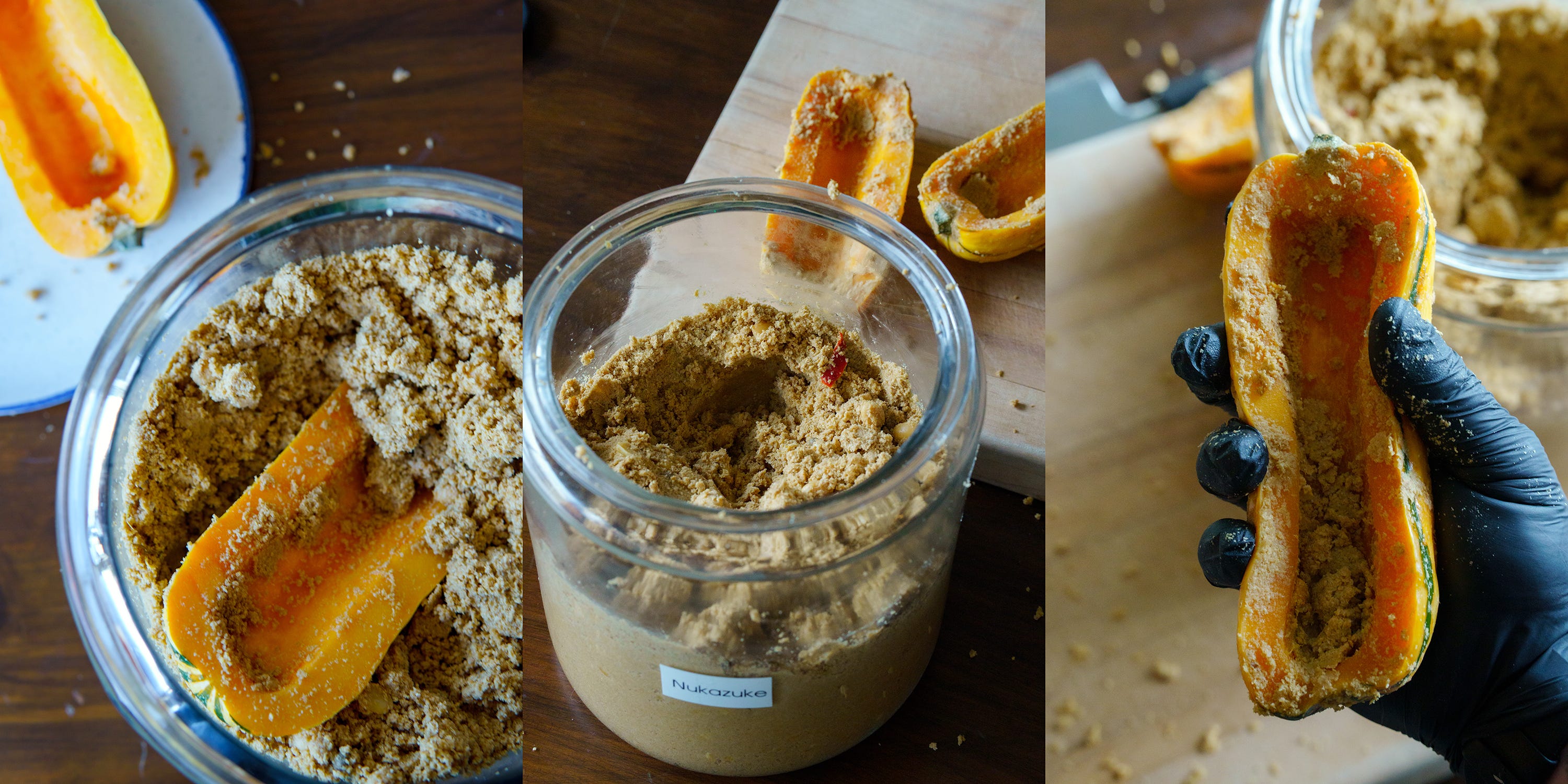
This living quality is what defines nukazuke. The vegetables such as cucumbers, daikon, carrots, delicata squash, eggplant, or cabbage leaves are not preserved in the same way vinegar pickles are. Instead, they are transformed. When buried in the nukadoko, the bacteria reshape their flavor and texture. A cucumber might become sharper and more aromatic. A carrot becomes savory and deep. Daikon becomes juicy, crisp, and slightly tangy. Even mild vegetables taste vibrant after only a few hours in the bed.
Caring for the nukadoko is the heart of the process. Many people imagine it requires significant effort, but the reality is surprisingly gentle. The bed needs to be mixed once a day to keep oxygen circulating through the bran and to prevent the bacteria from becoming stressed or unbalanced. This mixing also redistributes moisture and salt so that no areas become too wet or too dry.
Salt plays an essential role. It keeps harmful microbes away and encourages the growth of the lactic acid bacteria that define nukazuke. A well balanced bed smells slightly sour, warm, and pleasantly toasty. If the scent drifts toward yeasty or alcoholic, it is a sign the bed needs adjustment, usually in the form of fresh bran or a light sprinkling of extra salt.
Moisture is another key indicator of health. As vegetables release liquid, the bed can become too wet. This is easily corrected by adding dry bran to absorb the excess or adding a small amount of salt to draw liquid out of the vegetables you place inside. Over time, the nukadoko becomes deeply seasoned, and its flavor matures, giving vegetables an unmistakable complexity that no other method can reproduce.
The ease of using a nukadoko often surprises people. Once the bed is stable, pickling becomes an everyday action rather than a project. Vegetables can be buried in seconds and pulled out later that same day or the next morning. Quick pickles such as cucumbers or radishes take only a few hours. Firmer vegetables take longer, but even those rarely stay buried more than a day or two.
This effort-free rhythm is what makes nukazuke so practical. A few slices of pickled cucumber can complete a lunch. Pickled daikon adds brightness to rice bowls. A small dish of crisp carrots or eggplant becomes a refreshing snack. The pickles can be eaten plain, tossed into salads, added to sandwiches, minced into dressings, or chopped into sauces. Because the process is continuous, the nukadoko becomes a steady source of fresh fermented vegetables.
Integrating nukazuke into a modern routine does not require tradition, special equipment, or large amounts of time. A small crock, a container with a tight fitting lid, or even a sturdy food-safe plastic tub will work. The daily mixing takes under a minute. Vegetables can be added when preparing dinner and removed the next day. The more the bed is used, the more stable and flavorful it becomes. It actually thrives with regular activity, which makes it ideal for anyone who wants fresh ferments without long wait times.
What makes this method so appealing is its adaptability. The nukadoko responds to you and your habits. If you are busy or traveling, the bed can rest in the refrigerator for weeks with minimal care. When you return, a few stirrings and fresh vegetables quickly revive it.
In the end, nukazuke is more than a preservation method. It is a relationship between the cook and a living culture. It teaches attentiveness without demanding perfection and offers steady reward for simple repeated actions. With a handful of ingredients, a bit of mixing, and a willingness to observe, anyone can fold this practice into daily life. Over time, the nukadoko becomes a reliable source of flavor, nourishment, and quiet satisfaction.
Starting a new nukadoko from scratch.
Combine 400 grams of rice bran with 300 grams of warm water and 45 grams of salt. Add a small piece of dried kombu, one clove of garlic, and one dried chili if you want added aroma. Mix until the texture feels like damp sand. Add a few vegetable scraps such as cabbage leaves or carrot ends and bury them completely. Stir the bed once each day and replace the starter vegetables daily for about 5 to 7 days. When the bed smells pleasantly sour and nutty, it is ready to begin producing true nukazuke! Happy Fermenting!